
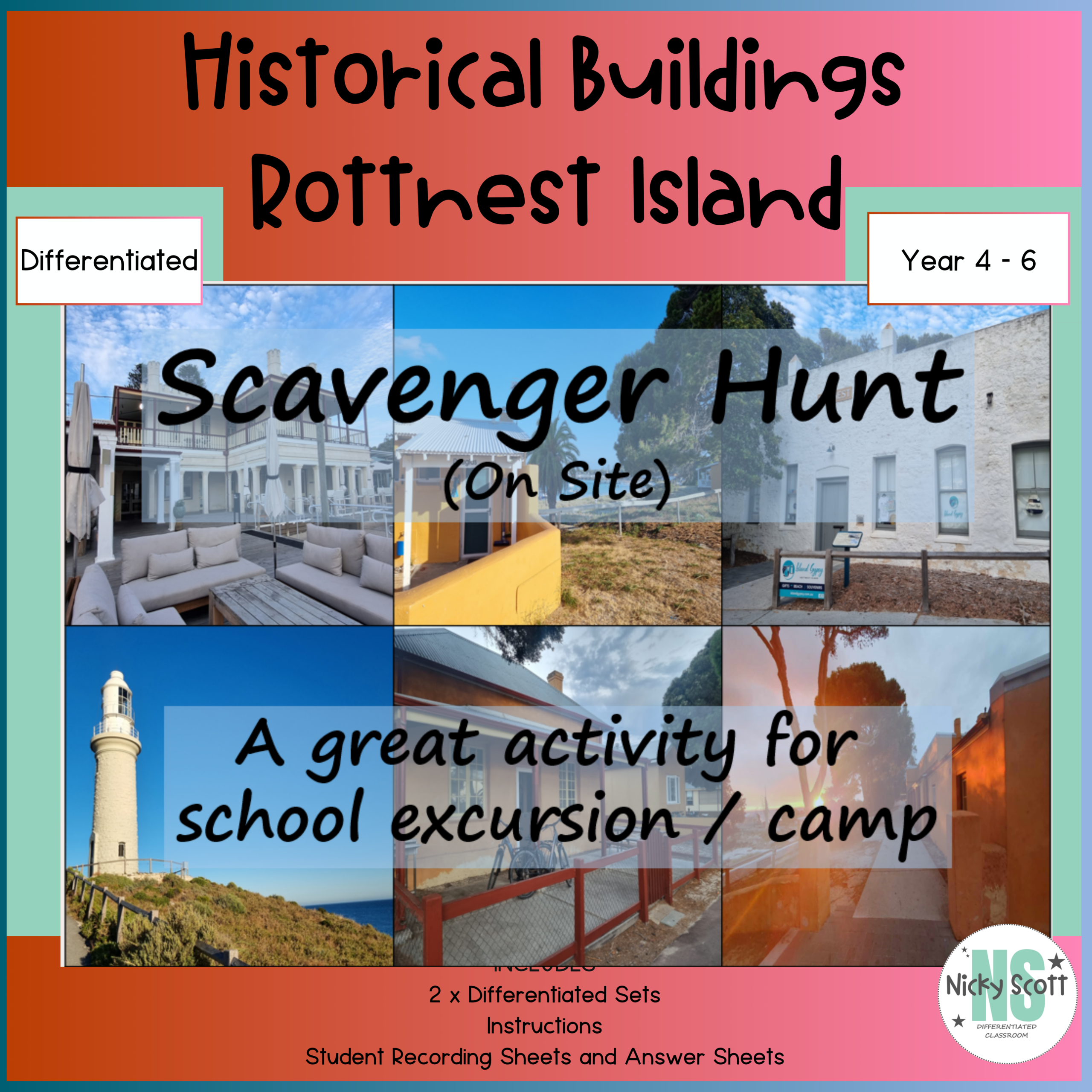
Historical Buildings of Rottnest Island Excursion Scavenger Hunt – Differentiated
$ 2.50
This Scavenger Hunt is editable to allow for the needs of your particular group of students. Not all of Rottnest Island’s historical buildings are featured. Additional blank cards are available for you to edit if you wish to include more or if you wish to make changes to the ones already featured. Two card sets (A-P and 2A-2P) with slight variations have been included to help you differentiate. Student answer booklet and answer sheets are included. How to play: •The object of the Scavenger Hunt is to work together as a team to decipher the clue on each task card to determine the name of each historical building featured. Teams are then required to complete a task and a challenge before moving on to the next card. •Best completed in small groups, but can also be completed in pairs, or individually. •Each group is given a set of task cards and an answer booklet to record their results. NOTE: limit congestion at each of the sites by allocating a different starting card for each group. Groups then work through their cards in alphabetical order. E.g: Group 1 – starts at Card A, then B, C, D etc… Group 2 – starts at Card B, then C, D, E etc… •Teams should also be provided with an island map to assist with navigation (see links / information on the ‘Support Resources’ slide of this PowerPoint). •Teams must stay together. •Answers are not to be shared with other teams. •All teams to start and finish at a pre-determined location – on the grass in front of the Old Salt Store is one suggestion. •Agree on a time for students to meet back at the starting point to share their results and discuss what they have learned. •Some groups will inevitably finish earlier than others. Ensure someone is stationed at the meeting location throughout the task. •Have activities available for early finishers. Differentiation: This version of the Historical Buildings of Rottnest Island scavenger hunt includes the name of the building in each of the clues, thus allowing for differentiation to cater for a broader range of students. Some advantages of including the name of each building include: •Less time deciphering each clue and more time spent on completing each of the tasks/challenges. •Less time required to successfully complete the scavenger hunt. •More time to focus on the historical content of each site. •Specific information (building name) that can be used to ask questions / seek guidance from local volunteers/businesses to assist with completing tasks/challenges. •Quicker and easier to locate and identify on a map (some clues even include the street name). Differentiation can also be achieved by: •Increasing/decreasing the number of scavenger hunt cards provided to each student/group. •Providing students with a specific order in which to complete the cards to minimise time spent travelling between sites (more direct routes) •Different group sizes, e.g. pairs, small groups, ability groups (homogeneous or heterogeneous). Have fun and remember to work as a team!
Related products
-
 Quick View
Historical Buildings of Rottnest Island Excursion Scavenger Hunt – Differentiated
$ 2.49 Add to cart -
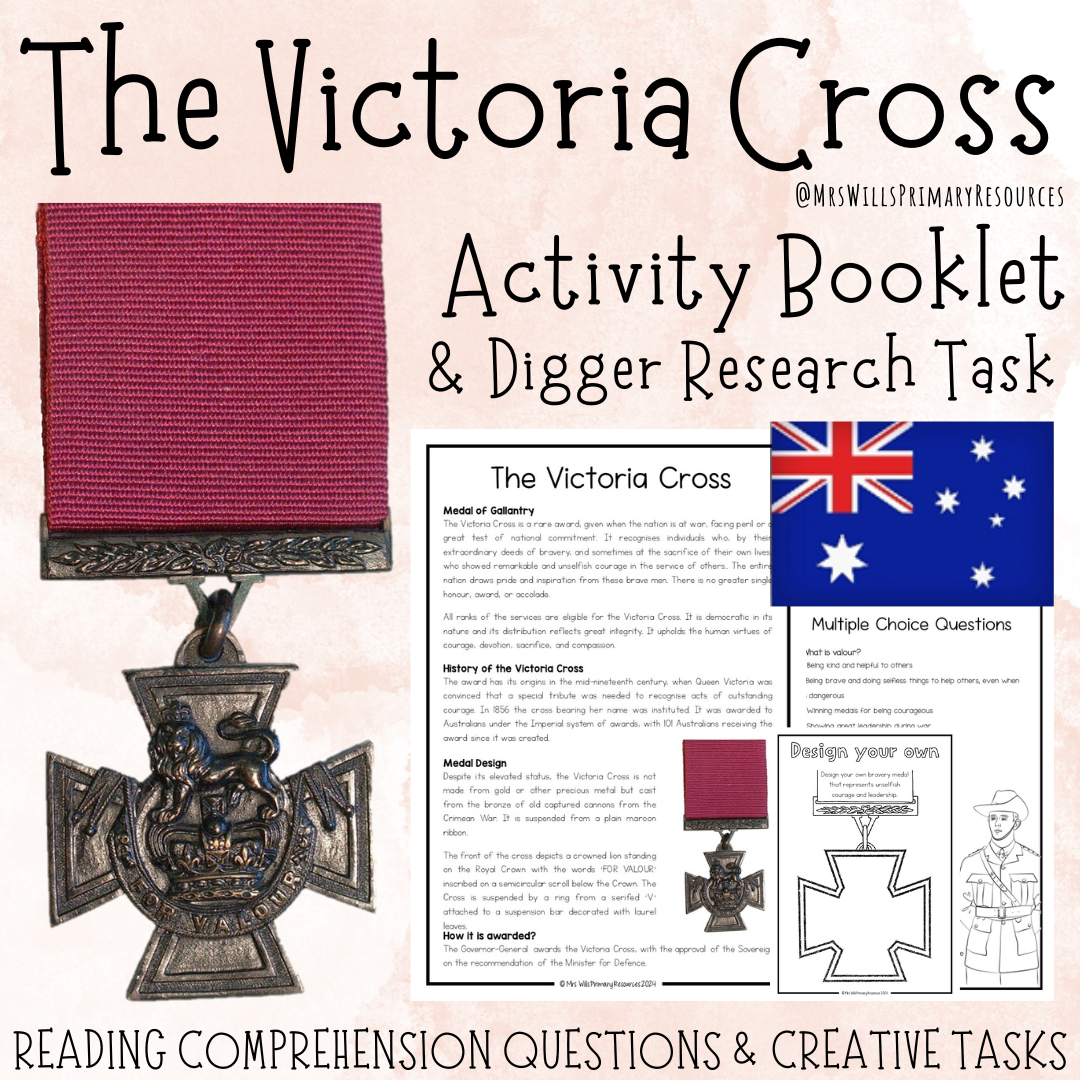 The Victoria Cross Activity Booklet | Design a Medal | HASS | WWI Research TaskAdd to cart
 -
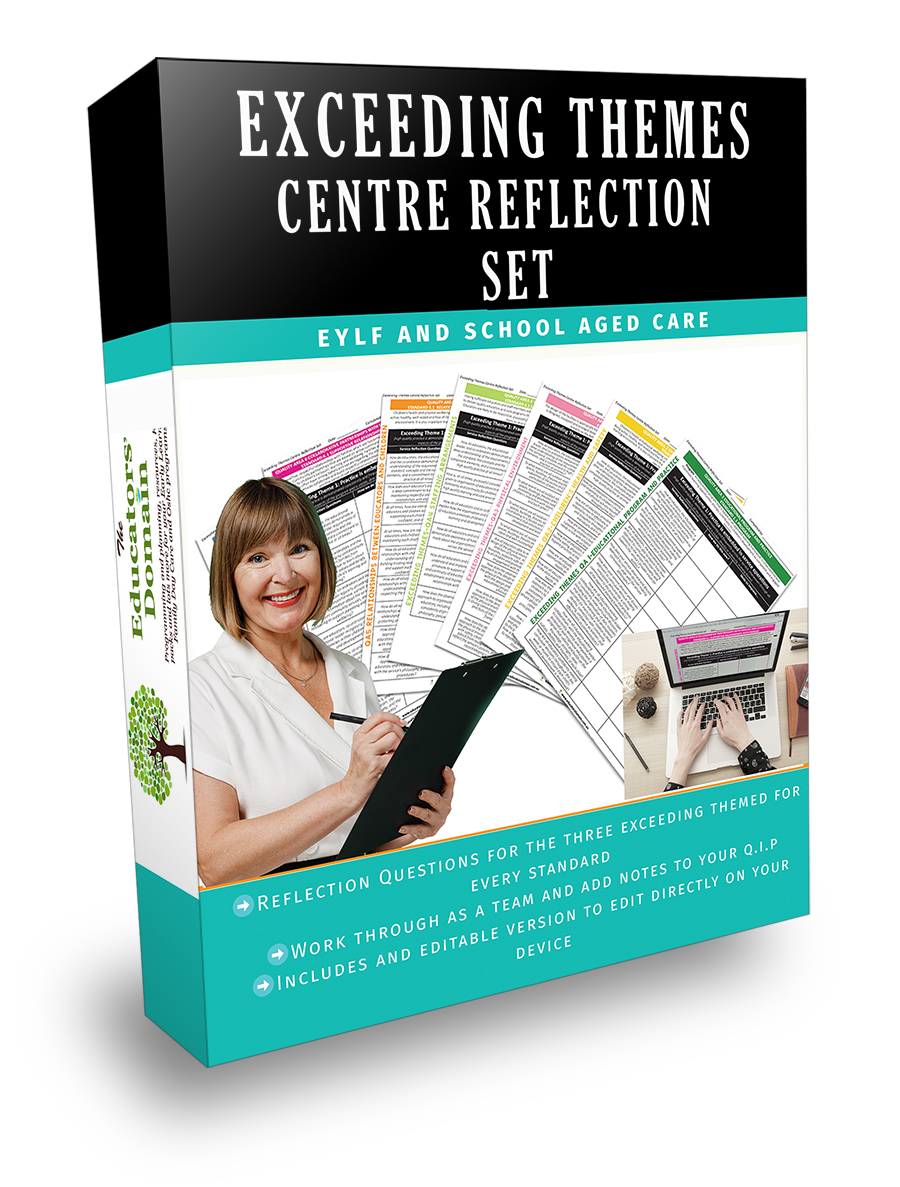 Exceeding Themes Centre Reflection SetAdd to cart
 -
 Quick View
Historical Buildings of Rottnest Island Excursion Scavenger Hunt – Differentiated
$ 2.34 Add to cart -
 Quick View
Historical Buildings of Rottnest Island Excursion Scavenger Hunt – Differentiated
$ 61.90 Add to cart -
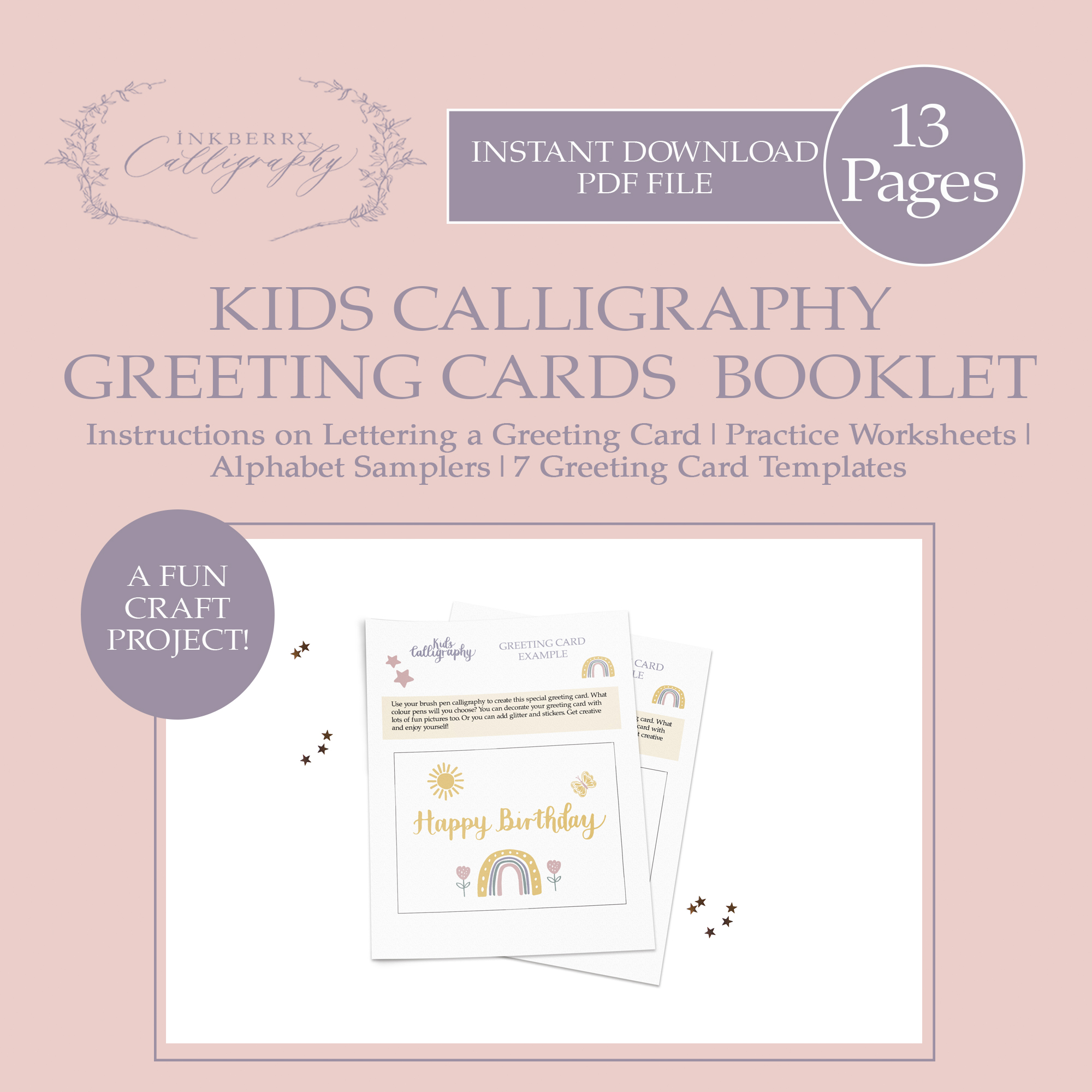 Kids Calligraphy Greeting Card Booklet – Instant DownloadAdd to cart
 -
 Quick View
Historical Buildings of Rottnest Island Excursion Scavenger Hunt – Differentiated
$ 5.78 Add to cart - Quick View
Historical Buildings of Rottnest Island Excursion Scavenger Hunt – Differentiated
$ 2.50 Add to cart